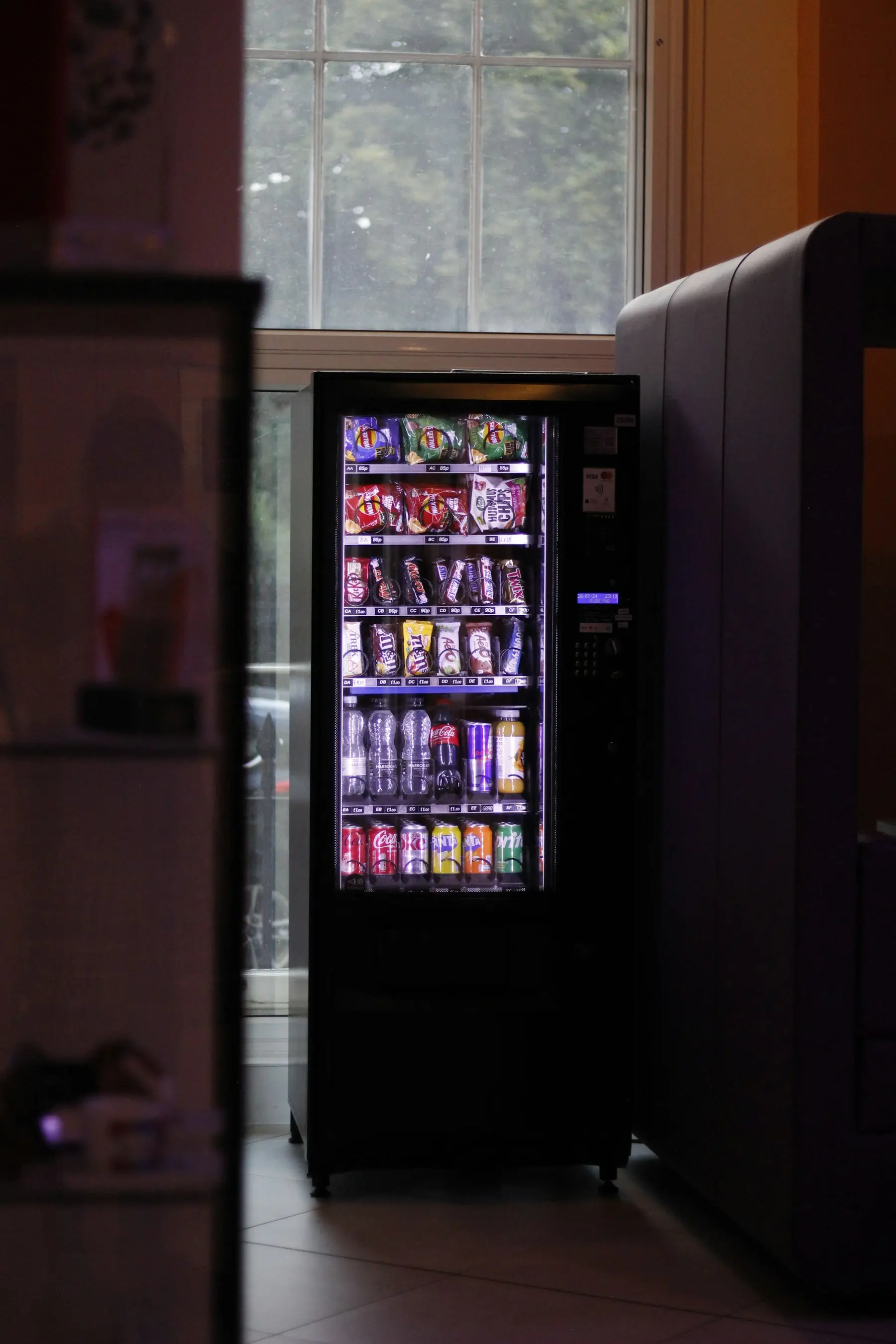
A vending machine in California needs a seller’s permit, which is free (CDTFA15), and a business registration in the city where it sits, which is $38 in San Diego (City of San Diego8) and $59 in San Francisco (SF Treasurer3) for a small operator. A health permit is needed only if the machine holds food that needs refrigeration (CalCode11). That costs $273 a machine in San Francisco (SF DPH7) and $98.50 for up to ten machines in San Diego County (DEHQ10).
The three permits
| Permit | Who issues it | Who needs it | Cost |
|---|---|---|---|
| Seller’s permit | CDTFA (state) | Every vending operator | $0 |
| Business registration | City | Every business operating in the city | $38–$59 for a small operator |
| Health permit | County environmental health | Machines with food or drinks that need refrigeration for safety | $98.50–$743 in the first year |
Seller’s permit
Anyone selling through a vending machine generally needs one, and one permit covers every machine you operate (CDTFA Regulation 15742). The CDTFA does not charge for it, though it can require a security deposit (CDTFA15).
Each machine has to show the operator’s name, address, and seller’s permit number in a conspicuous place (CDTFA Regulation 15742). How the tax itself works.
City registration
Fees and deadlines from the SF Treasurer3 and the City of San Diego’s fee page8 and registration page9.
| Item | San Francisco | City of San Diego |
|---|---|---|
| Fee | $55 if SF receipts are $100,000 or less; $95 up to $250,000; $160 up to $500,000 | $34 with 12 or fewer employees; $125 plus $5 per employee with 13 or more |
| State fee | $4 | $4 |
| Deadline | Within 30 days of starting | Within 15 days of starting |
| Renewal | By the last day of February; the year runs April 1 to March 31 | Annual |
| Late | — | $68 surcharge, and the city bills back up to three years |
San Francisco’s First Year Free program waives first-year registration, permit, and license fees for new businesses with $5 million or less in San Francisco receipts and a commercial location. It runs through June 30, 2027 or until the money runs out (SF Treasurer4). Whether an operator whose machines sit in other people’s buildings counts as having a commercial location is a question for the Treasurer’s office.
Health permit: which machines need one
California’s Retail Food Code defines a vending machine as a self-service device that dispenses food and operates with a commissary. It excludes machines that dispense only (CalCode §11393811):
- nuts, popcorn, gum, hard candy, and packaged candy;
- cookies, crackers, and similar packaged snacks;
- drinks that do not need refrigeration for safety;
- packaged ice.
So a snack machine and a soda machine are outside the definition. A machine holding sandwiches, salads, yogurt, or milk is inside it, and no food facility can operate without a permit.
San Francisco’s Health Code uses its own definition: a device that takes money, card, or mobile payment and dispenses potentially hazardous food or beverages (SF Health Code §4515).
Health permit: what it costs
From San Francisco DPH’s FY27 schedule7 and the San Diego County DEHQ schedule10:
| Item | San Francisco (DPH) | San Diego County (DEHQ) |
|---|---|---|
| Annual fee | $273 per machine, April 2026 to March 2027; $300 the year after | $98.50 per 10 machines or part |
| Application | $470 with the first inspection | Not listed separately |
| Plan check | $1,103 listed for vending machines | Not listed |
| Commissary permit, if you run one | — | $406 |
| Inspector’s hourly rate | $276 | $197 |
San Francisco’s fee schedule does not say “per machine”; that basis comes from the Business and Tax Regulations Code (§249.16). We could not confirm whether its application and plan-check fees apply per machine or once per operator, or how either county classifies a smart cooler. Call the environmental health office with the make and model before you buy.
Rules for a machine that holds refrigerated food
From the Retail Food Code (CalCode11):
- Temperature. 45°F or below for food held for dispensing in a vending machine. The limit elsewhere is 41°F.
- Thermometer. One in each refrigerated unit, reading the warmest part.
- Packaging. Food is dispensed in the package the commissary or processor put it in. Bulk refrigerated food is prohibited.
- Source. All food from an approved source. Home-prepared food is barred, apart from registered cottage food operations. A business that manufactures or packs processed food needs a state Processed Food Registration (H&S Code §11046012).
- Labels on the food. Common name, ingredients in order of weight, quantity, and the name and place of business of the maker, packer, or distributor.
- Sign on the machine. The owner’s name, address, and telephone number.
- Cleaning record. Kept in each machine and current for the past 30 days.
- Construction. Built to NSF or NAMA standards, or the equivalent.
- Outdoors. Overhead protection, and a self-closing door on the dispensing compartment.
California’s code has no section that requires an automatic shut-off when a machine gets warm. The FDA’s model Food Code does, at 41°F for more than 30 minutes, and most smart coolers have one built in. California does not have a general seven-day date-marking rule either; that is also in the FDA model and was not adopted here.
Forming an LLC
Optional. A California LLC costs $70 to file, $20 for a Statement of Information due within 90 days and every two years after (Secretary of State13), and $800 a year in franchise tax. The first-year waiver of the $800 covered only LLCs formed from 2021 through 2023. An LLC formed in 2026 owes it by the 15th day of its fourth month (FTB14).
Federal rules that apply later
An operator with 20 or more machines has to post calories for each item under the FDA’s vending rule. Items whose Nutrition Facts label the buyer can see before purchase are exempt (FDA16).